Description
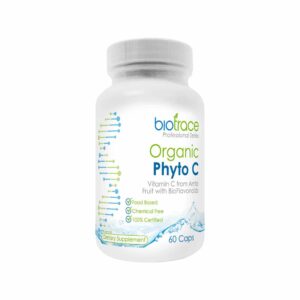
Camu Camu is a fruit that grows in the river deltas of the Peruvian and Brazilian Amazon rainforest. It has the highest documented source of natural vitamin C complex in the plant kingdom.
Camu Camu powder is processed from the berry of Amazonian Myrciaria dubia plant and is one of the richest natural sources of vitamin C on Earth. It contains anywhere between 20 and 60 x the levels of vitamin C than oranges (per gram).
Camu Camu has an exceptionally high antioxidant profile, containing vitamin C and a wide array of polyphenols and phytonutrients.
100 percent naturally dried Camu Camu powder – without additives.
Health Benefits
- Antioxidant
- Supports immune health
- Natural source of vitamin C
Actives (polyphenols and phytonutrients)
100% naturally dried Camu Camu powder – without additives.
- Vitamin C : 2000-6000+ mg per 100g of fresh pulp (more concentrated in dired/powder forms).
- Anthocynanins: Cyanidin-3-glucoside, delphinidin-3-glucoside (give red-purple colour; strong antioxidant)
- Flavanols/Flavonoids: Myricetin (and conjugates), quercetin, kaempferol.
- Ellagic Acid & Derivatives : Ellagitannins, ellagic acid conjugate
- Phenolic Acids :Gallic acid & others.
- Carotenoids: Lutein (dominant), beta-carotene, zeaxanthin, violaxanthin, luteoxanthin.
- Other: Proanthocyanidins,, tannins, stilbenes, lignans; essential amino acids (e.g., serine, leucine, valine); minerals (potassium, iron, calcium, phosphorus).
Key Phytonutrients in Camu Camu
- Vitamin C
The standout nutrient – often 50–60 times higher than oranges.
The primary antioxidant driver in Camu Camu.
- Anthocyanins (Pigments with strong antioxidant effects)
Cyanidin-3-O-glucoside (C3G) – usually the dominant anthocyanin.
Delphinidin-3-O-glucoside (D3G).
Other minor anthocyanins: pelargonidin, malvidin, peonidin, petunidin derivatives.
- Flavonols and Flavonoids
Myricetin and its glycosides (e.g., myricetin-3-O-glucoside, myricetin-O-pentoside).
Quercetin and its glycosides (e.g., quercetin-3-O-glucoside, rutin, quercitrin, isoquercitrin).
Kaempferol derivatives.
Catechin and epicatechin (flavan-3-ols).
Other flavonols/flavones: luteolin, apigenin derivatives.
- Ellagic Acid and Ellagitannins
Ellagic acid and its derivatives.
Ellagitannins (e.g., castalagin, vescalagin, methylvescalagin).
Gallotannins and gallic acid derivatives.
- Other Phenolic Acids and Polyphenols
Gallic acid and gallotannin derivatives.
Syringic acid.
Chlorogenic acid and caffeoylquinic acids.
p-Coumaric acid and ferulic acid derivatives.
Proanthocyanidins (condensed tannins).
- Carotenoids
Lutein.
β-Carotene.
Violaxanthin and luteoxanthin.



Reviews
There are no reviews yet.